
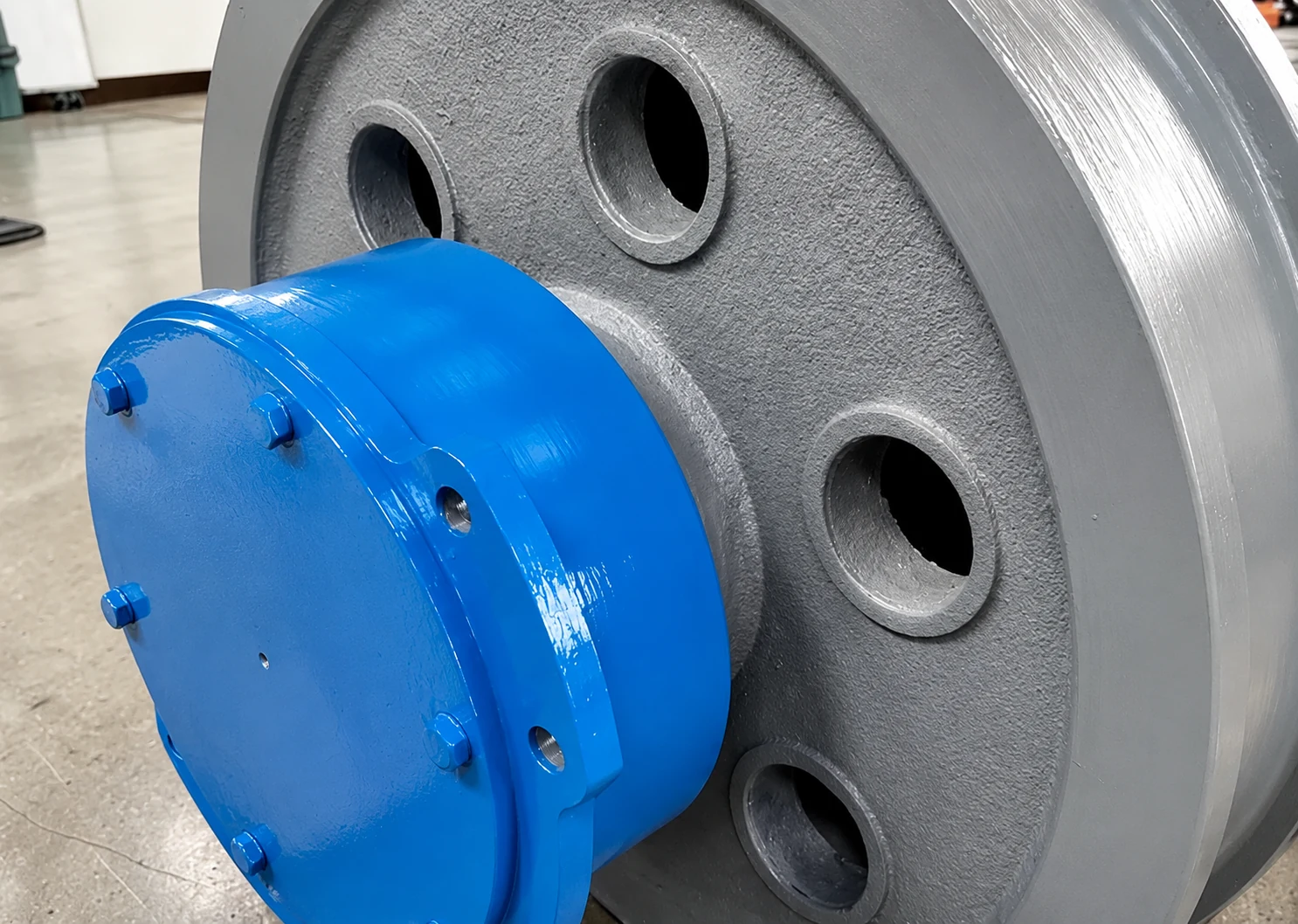
Proof point
Complete manufacturing and reconditioning route
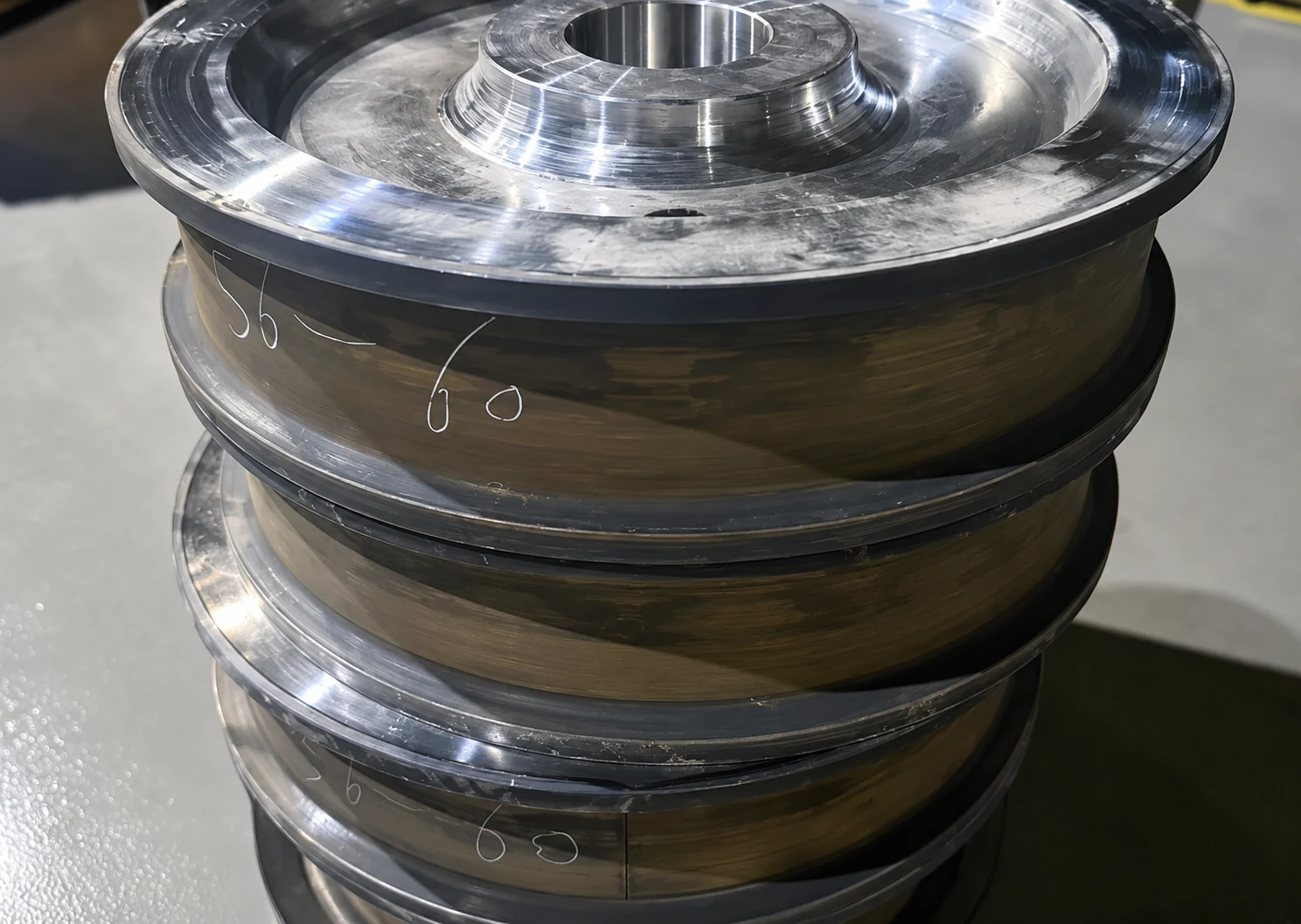
Controlled profile
Hardness where the wheel wears, toughness where it carries load
- Hardened tread
- Wear surface up to 60 HRC where required.
- Effective case depth
- Depth is specified and verified per project.
- Ductile core
- Core behavior supports shock and side forces.
- Side mark
- Permanent identification outside the running surface.
The number is not enough
A hard tread helps wear life, but the wheel can still fail if the transition zone, flange behavior, case depth, or final geometry are not controlled.
Controlled hardening
Surface hardness is achieved through a defined process route while the wheel body retains the toughness required to carry impact and side loads.
Documented inspection
Rockwell hardness checks, dimensional inspection, material records, and heat-treatment records provide a complete verification record.
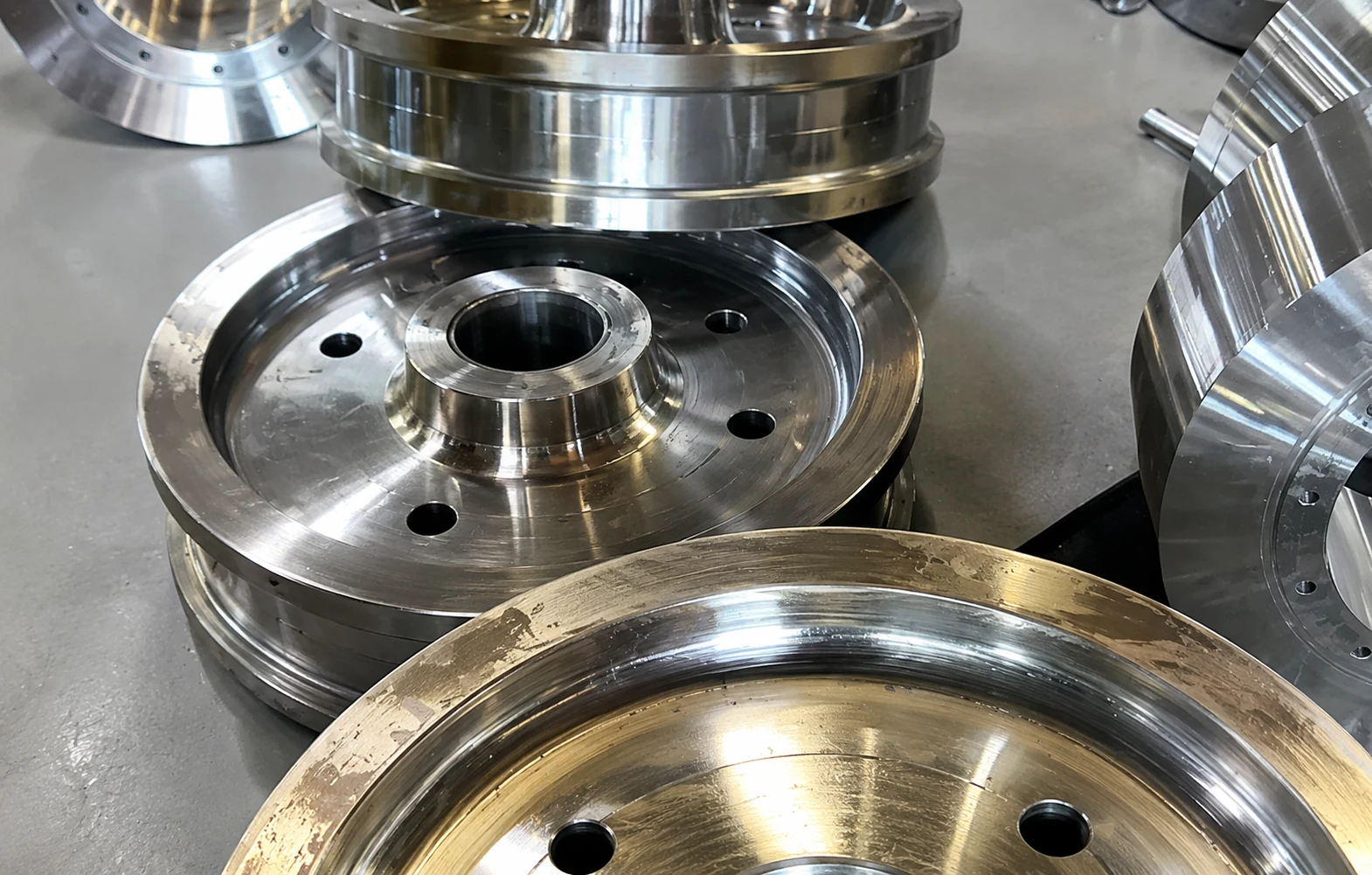
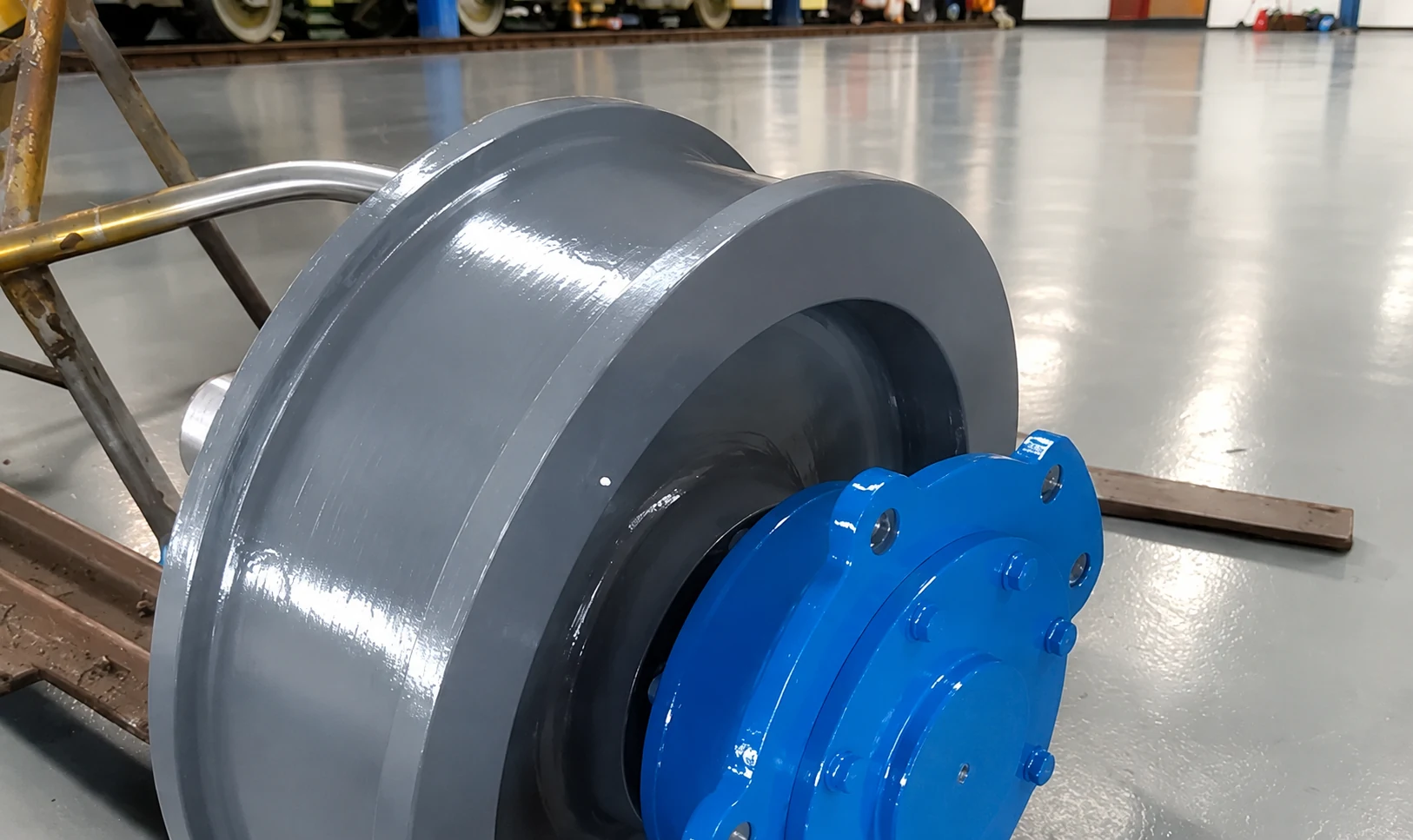
Production evidence
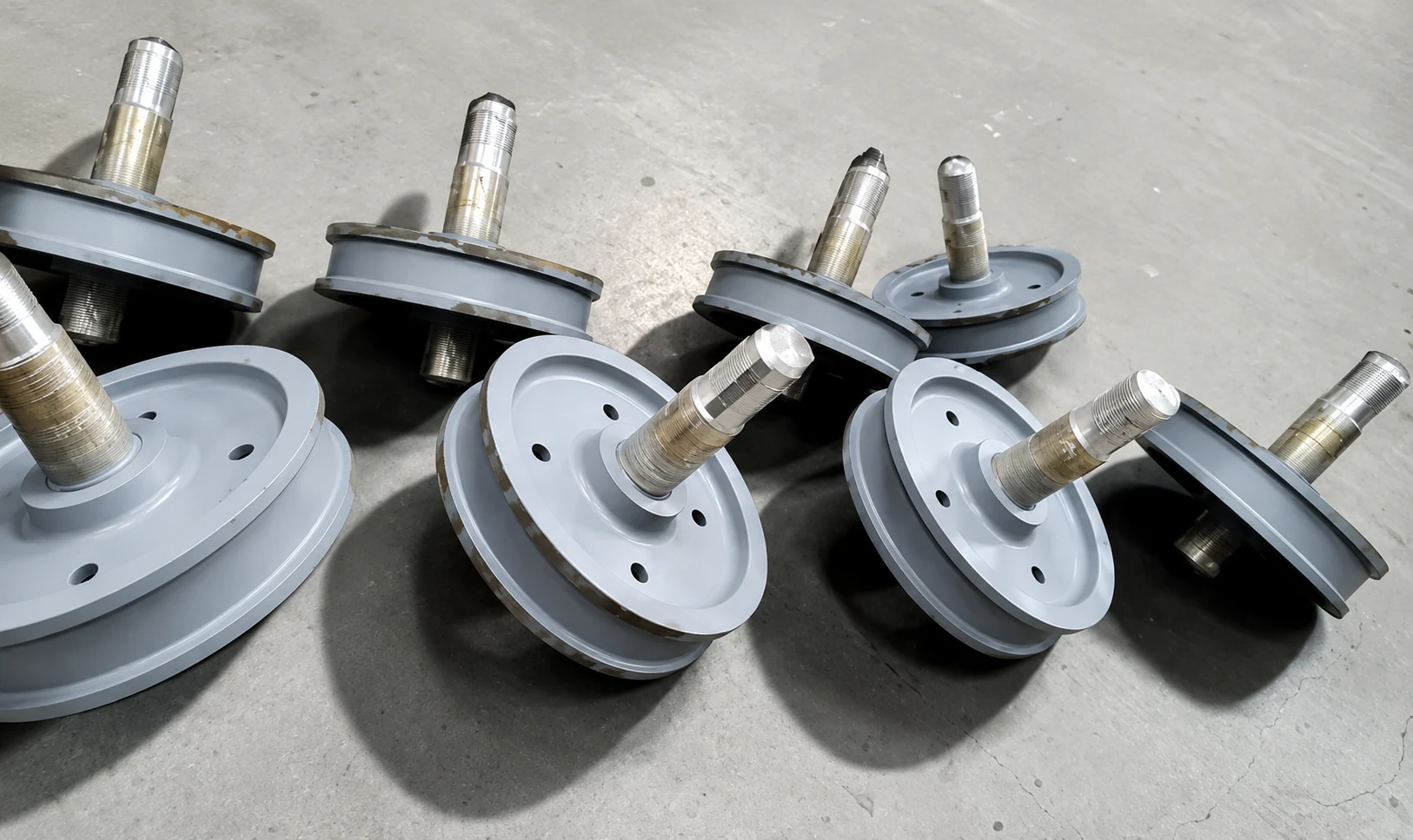
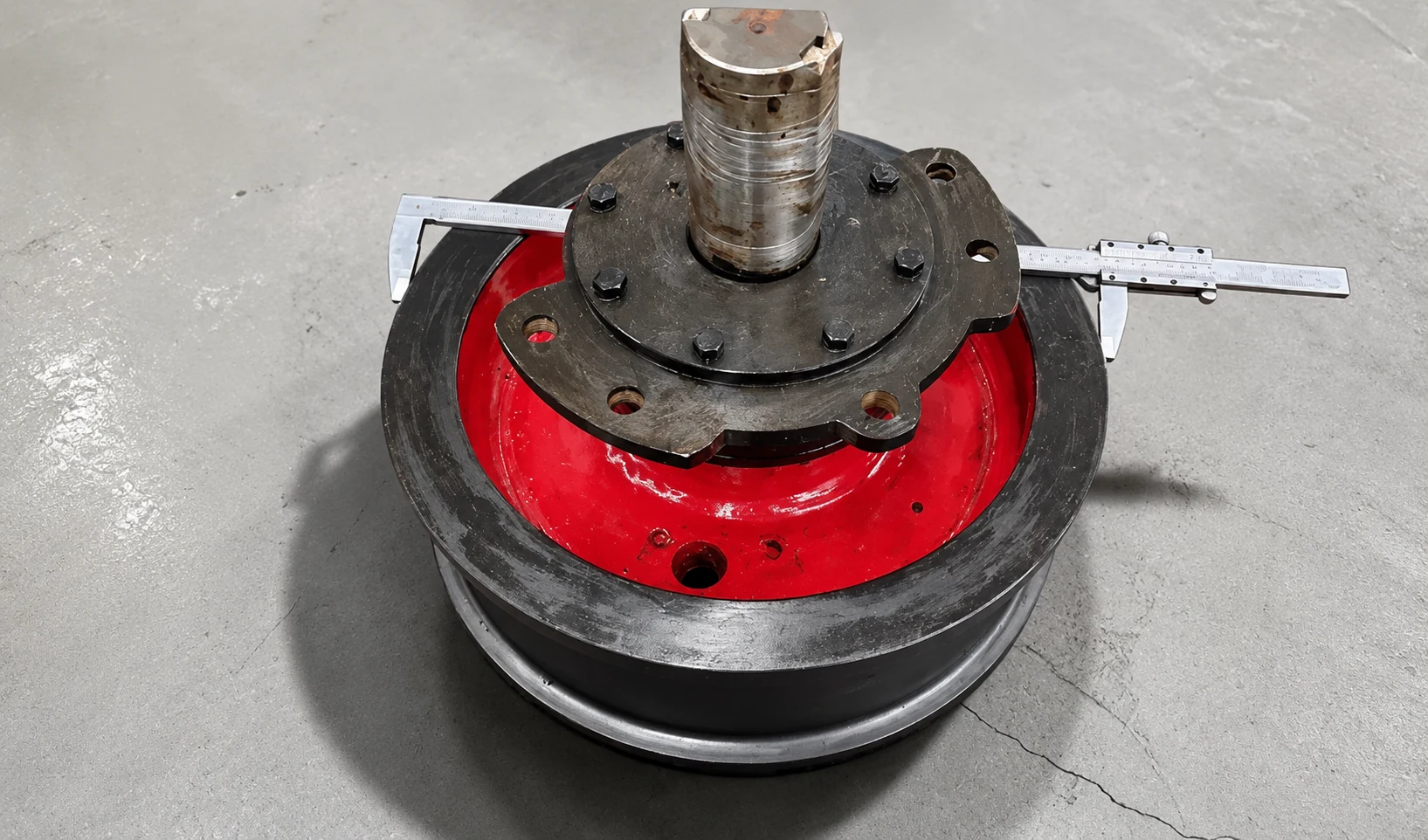
Real crane wheel workpieces
Traceability
A mark identifies the wheel, the serial code traces the record
A side groove or brand mark by itself does not trace a wheel. The traceability comes from the stamped or engraved serial code that links the physical wheel to records.
BRUVAL SIDE MARK
BRV-CW-2026-001
| Wheel serial | Unique part ID, drawing revision, batch, and customer project |
|---|---|
| Material record | Steel grade, heat number, certificate, and incoming inspection |
| Heat treatment | Hardening route, case depth requirement, cycle data, and operator record |
| Hardness checks | Rockwell readings on defined tread and flange inspection points |
| Final inspection | Dimensional report, visual check, NDT where required, coating and packing |
Inquiry data
Information required for a crane-wheel assessment
Engineering defines the wheel route from its geometry, material, operating loads, wear condition, hardness requirements, and delivery scope.
- Wheel drawing, rail profile, and flange geometry
- Material grade or required standard
- Required surface hardness and effective case depth
- Load, speed, duty cycle, and operating environment
- Current wheel wear pattern or failure photos
- Quantity, shaft or bearing housing scope, coating, and delivery target
Technical brochure
High-Hardness Crane Wheels
The PDF brochure provides additional technical detail on wheel geometry, material selection, hardening, inspection, and traceability.
Open PDF brochureCrane wheel request
Send the wheel drawing, rail profile, hardness requirement, and wear photos.
BRUVAL can review the required geometry, material route, hardness target, case depth requirement, inspection pack, and replacement or reconditioning path.