
Application
Restore worn parts or protect new parts
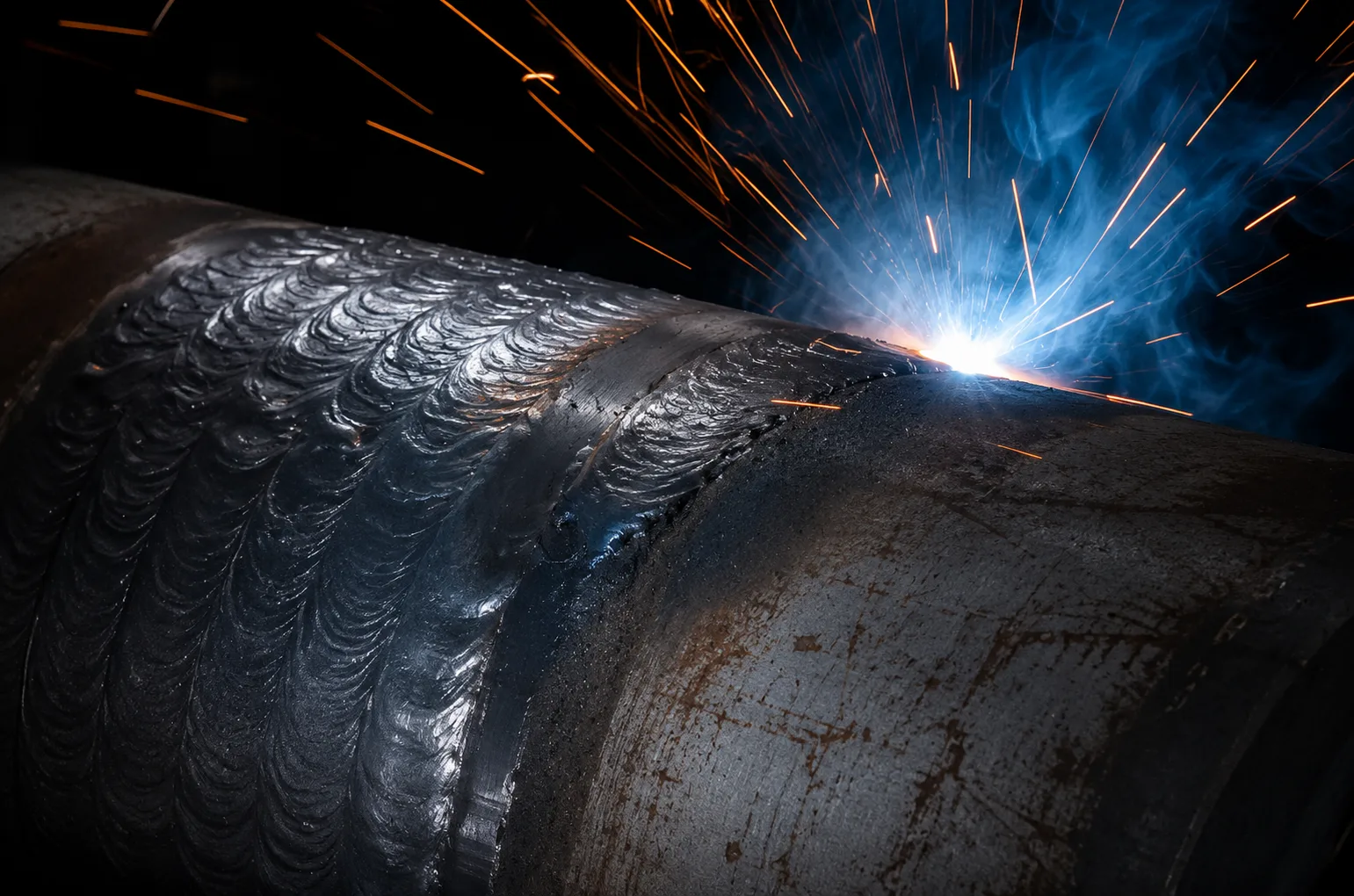
Hard-facing deposits a wear-resistant layer on selected surfaces to restore geometry or improve resistance to abrasion, impact or heat.
Processes
Welding and cladding methods
- Semi-automatic welding by inert gas (MIG)
- Semi-automatic welding by active gas (MAG)
- TIG welding
- Shielded Metal Arc Welding (SMAW)
- Submerged Arc Welding (SAW)
- Plasma Transferred Arc welding (PTA)
- Electroslag Welding (ESW)
- Laser cladding
Process photos
Weld, cladding, and surface examples
Reconditioning route
An engineered repair process
Assess wear
Identify the worn area, base material, crack risk, geometry loss, and whether repair is technically justified.
Prepare surface
Clean, machine, preheat, remove damaged material, and define the weld or cladding strategy.
Apply layer
Use the selected hard-facing method and thickness to restore or upgrade the functional surface.
Finish and inspect
Machine or grind to final geometry, then verify hardness, visual condition, NDT, and dimensional fit where required.
Reconditioning value
Repair can be more valuable than replacement
Related repair pages
Hard-facing for wear-critical components
 Repair and production
Wear Components
Repair and production
Wear Components
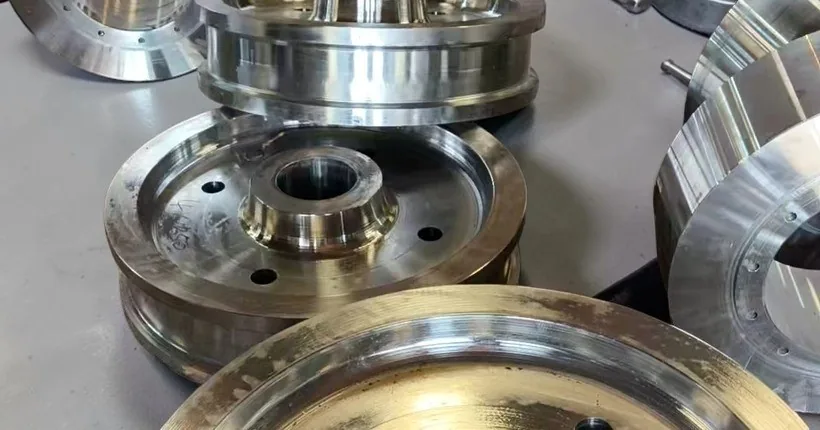
Reconditioning supports wheels, rolls, shafts, rollers, sleeves, and other wear-critical components.
 Existing-part analysis
Reverse Engineering
Existing-part analysis
Reverse Engineering
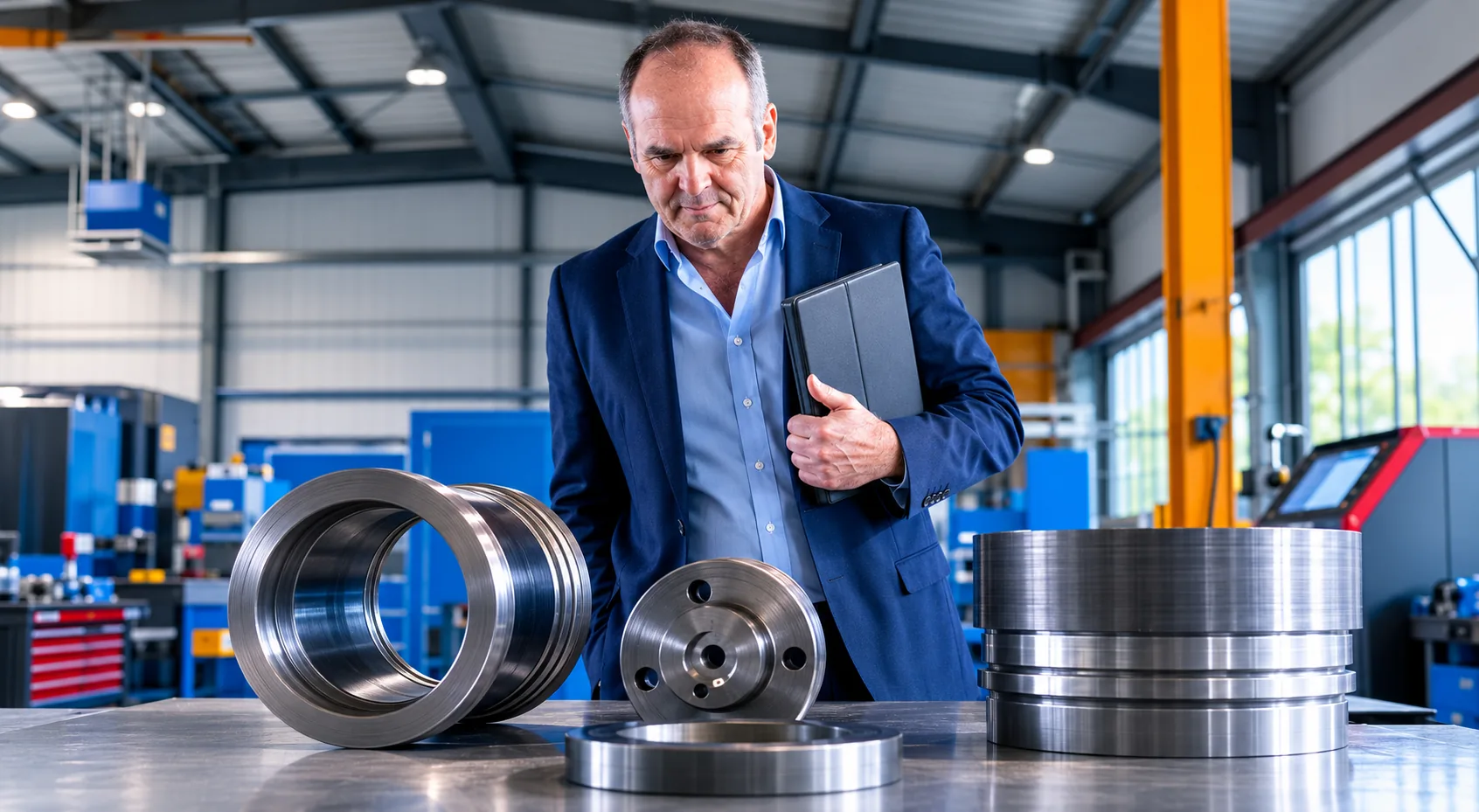
Worn parts, measurements, and photos establish the route for replacement or repair.
 Records
Inspection & Traceability
Records
Inspection & Traceability
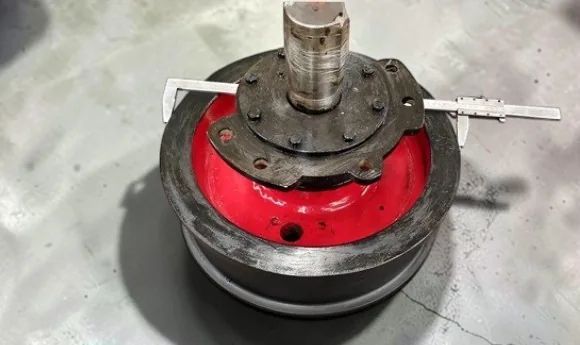
Hardness, dimensional, material, and process records verify the reconditioned component.
Project request
Send hard facing requirements.
BRUVAL can review the requirement, confirm the suitable product or service route, and return the next technical step.