

Furnace capability
Large component heat treatment
Treatment planning
The route starts with the part function
Heat treatment is not only a furnace operation. The useful route depends on what the component must do after processing: resist wear, keep a tough core, relieve machining or welding stress, improve surface behaviour, or stabilize a large part before final inspection.
Surface requirement
Hardness, case depth, nitrided layer, or wear zone requirements should be defined around the actual contact area.
Core behaviour
Large parts may need a balance between hard working surfaces and a body that can carry shock, bending, or cyclic load.
Dimensional risk
Heating, soaking, quenching, and cooling can affect distortion, so critical fit points should be known before the route is selected.
Post-process checks
Hardness readings, dimensional control, surface inspection, and certificate records verify the completed treatment.
Hardness control
Heat treatment becomes stronger when it is connected to inspection
Requirement
Surface hardness, effective case depth, core behavior, material grade, and operating duty are confirmed before the route is selected.
Process
Hardening, carburising, nitriding, induction hardening, or stress relief is chosen around the part geometry and risk zones.
Verification
Rockwell, Brinell, Vickers, or microhardness checks can be linked to defined inspection points and final records.
Traceability
Material certificate, heat-treatment cycle, hardness readings, and dimensional checks should follow the exact serial-marked component.
Decision points
When heat treatment changes the production route
Before machining
Rough machining, stress relief, and later finish machining can reduce risk on large or welded components.
After welding
Stress relief or controlled thermal processing may be needed when welded assemblies must keep geometry and service reliability.
Wear upgrade
Hardening, nitriding, carburising, or induction treatment can be focused on surfaces that carry sliding, rolling, or impact contact.
Final release
Heat treatment should be connected to final hardness, dimensional, and visual checks before the part leaves production.
Repeat supply
Recorded cycles and inspection points help future spare parts follow the same accepted route.
Inquiry data
What helps BRUVAL evaluate heat treatment
- Drawing, material grade, certificate information, approximate weight, and part dimensions
- Required process if known: hardening, carburising, nitriding, normalising, annealing, stress relief, or other treatment
- Target hardness, case depth, core requirement, surface zone, and inspection points
- Current part condition: raw, rough machined, welded, repaired, hard-faced, finished, or previously heat-treated
- Critical tolerances, distortion-sensitive areas, fit points, and any final machining planned after treatment
- Quantity, target delivery date, customer standard, certificate requirements, and final documentation needs
Processes
Thermochemical and hardening technologies
- Atmospheric and low-pressure carburising (LPC)
- Carbonitriding and boriding
- Ferritic or classical nitrocarburising
- Gas or plasma nitriding
- Neutral and induction hardening
- Austempering and press quenching
- Normalising, annealing, and stress relief
Related proof pages
Heat-treatment verification in related applications
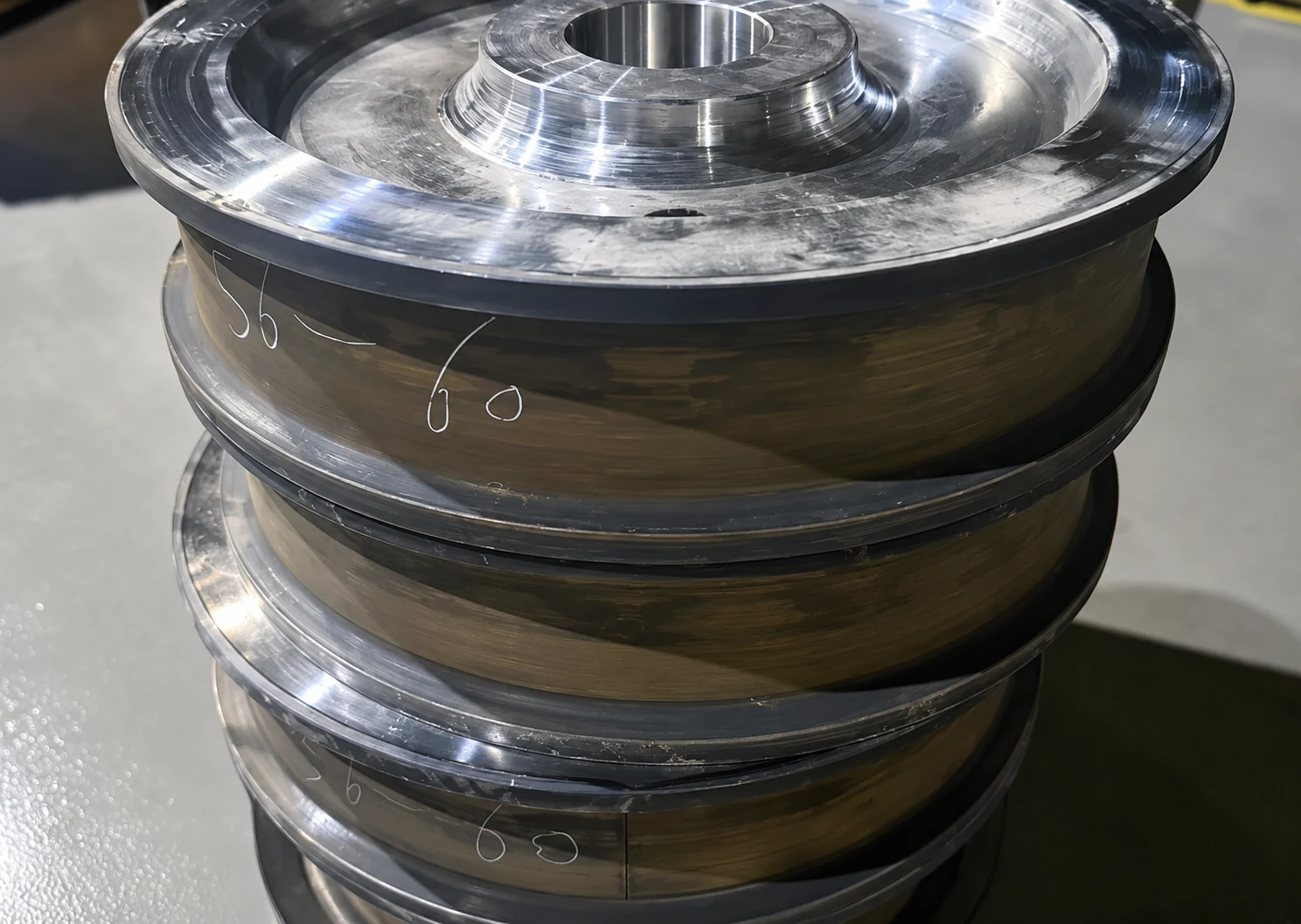 Up to 60 HRC
High-Hardness Crane Wheels
Up to 60 HRC
High-Hardness Crane Wheels
A clear example of controlled surface hardness, case depth, core behavior, and final inspection.
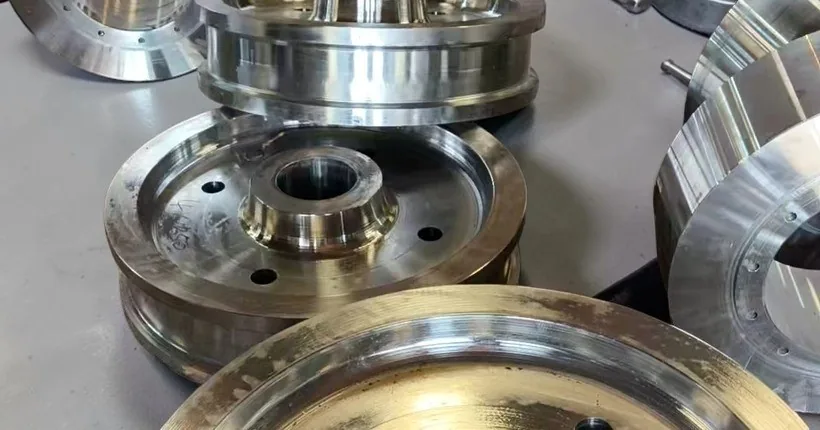 Hard-to-do parts
Wear Components
Hard-to-do parts
Wear Components
Wheels, rolls, shafts, rollers, and reconditioned parts follow defined process and inspection controls.
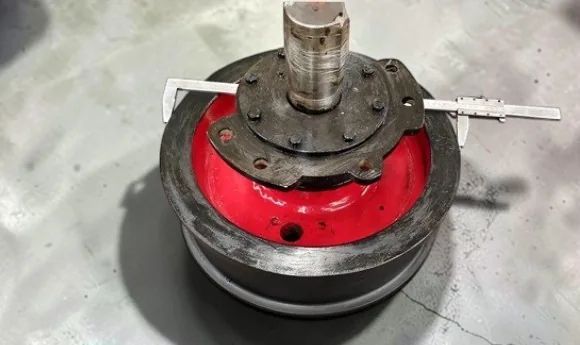 Record pack
Inspection & Traceability
Record pack
Inspection & Traceability
Hardness, dimensional, material, and process records verify compliance with the specified treatment route.
Project request
Send heat treatment requirements.
BRUVAL can review the requirement, confirm the suitable product or service route, and return the next technical step.